
VoraTool: Tooling management software for the toolroom
VoraTool manages the tooling in injection moulding, die casting and stamping plants: tooling history, job cards, repairs and service history, preventive maintenance and critical spares. Each record stays connected to the tool, part, customer and site context, so moulds and dies carry a retained service history instead of a scattered spreadsheet trail.
Everything in VoraTool
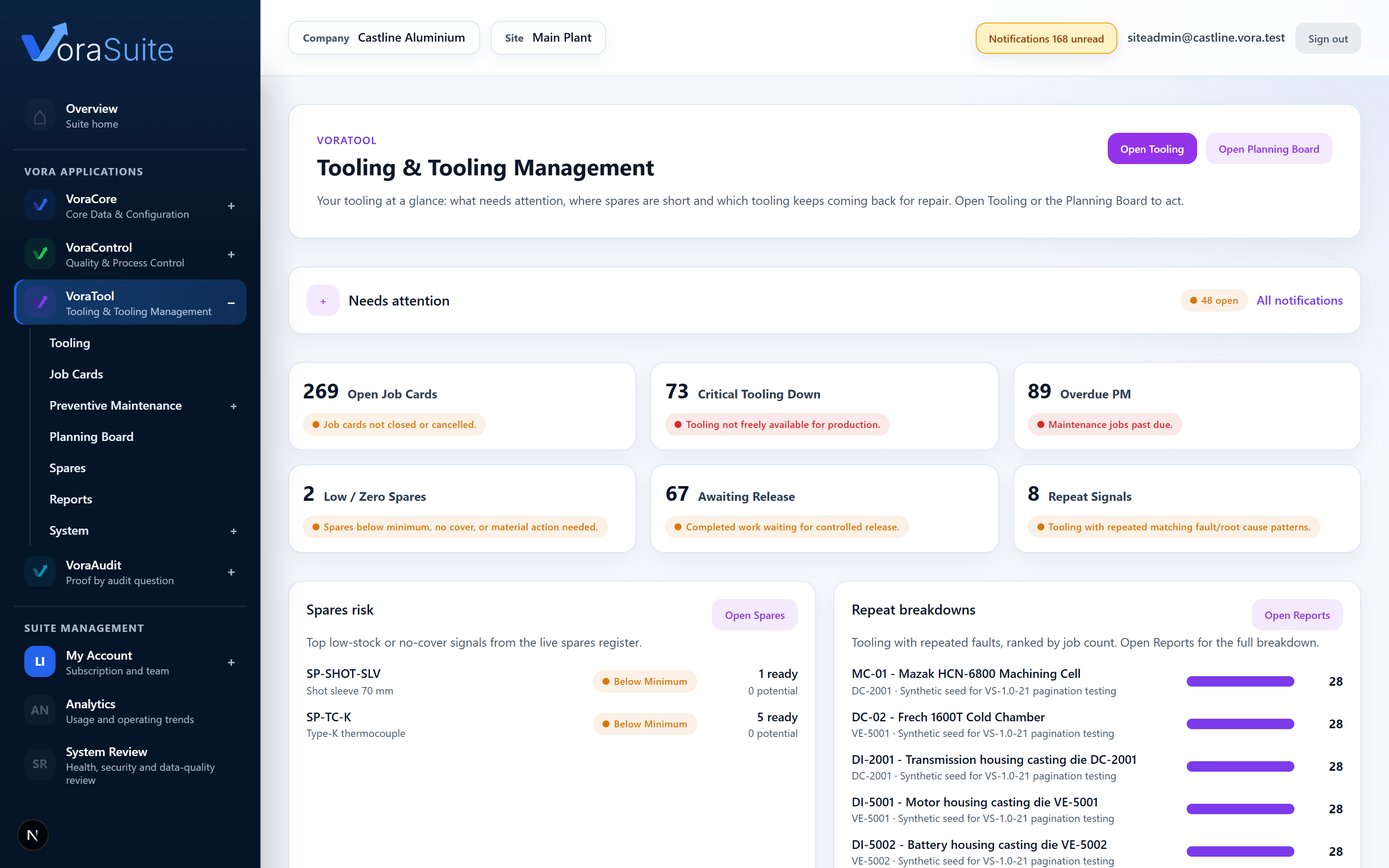
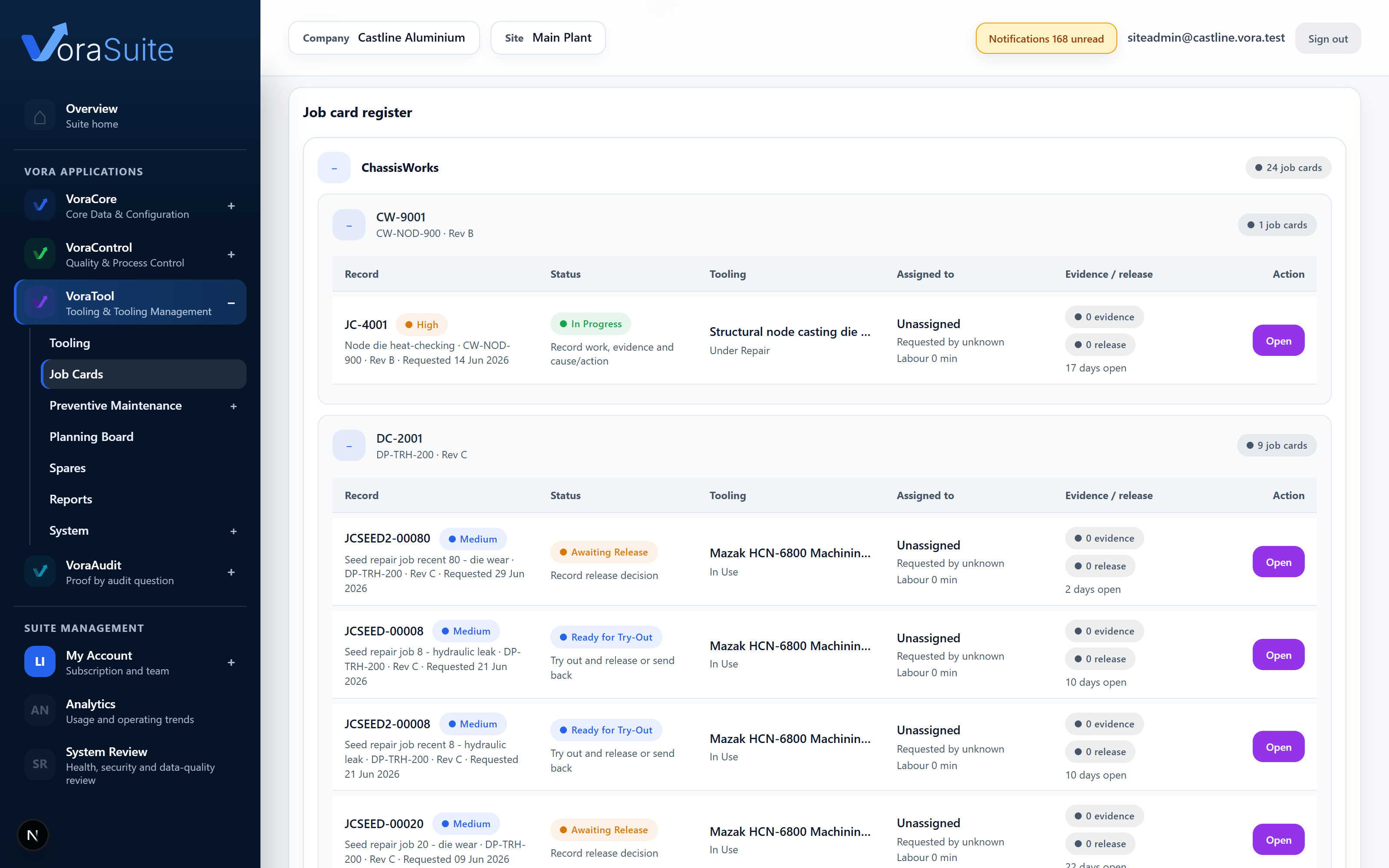
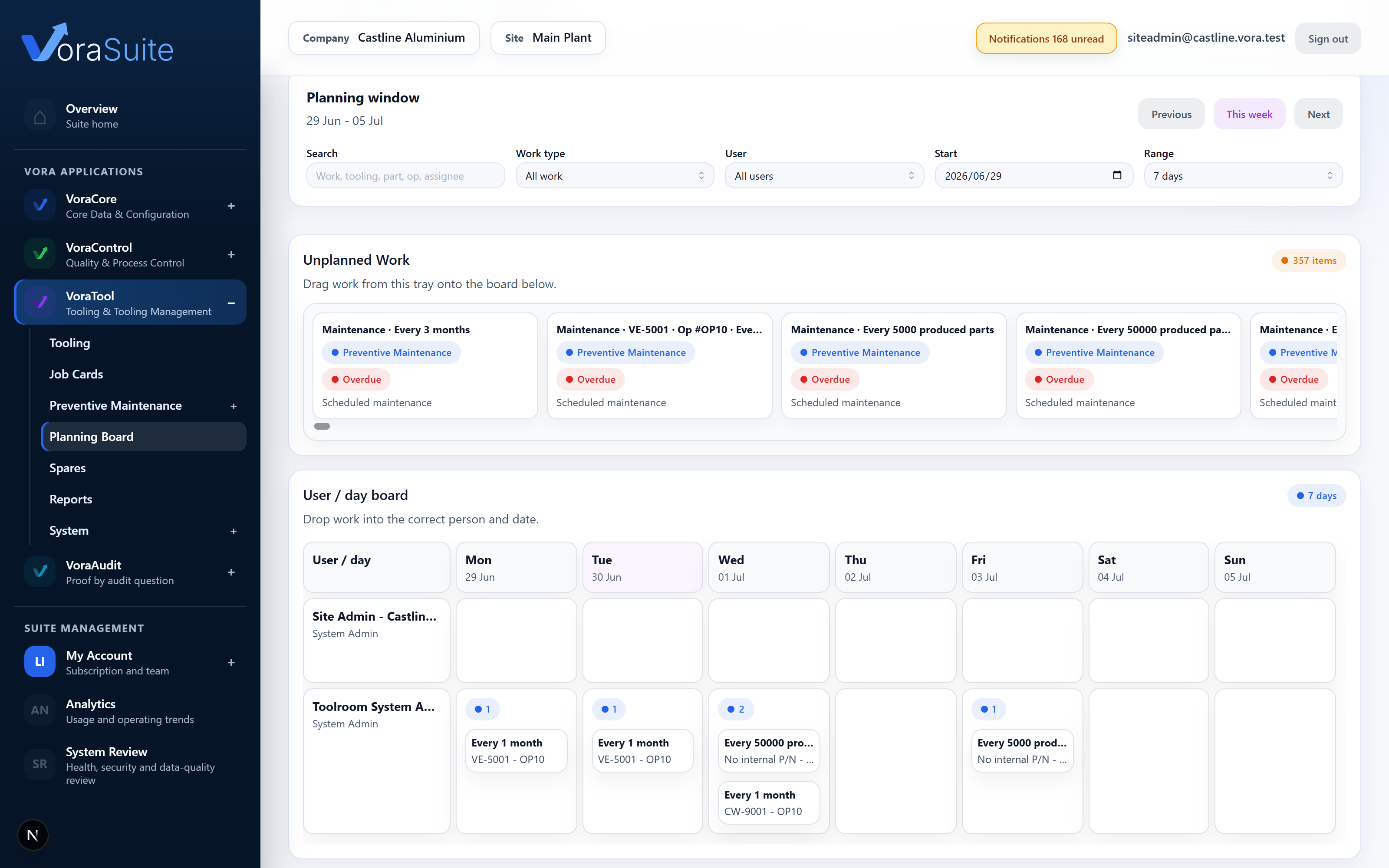
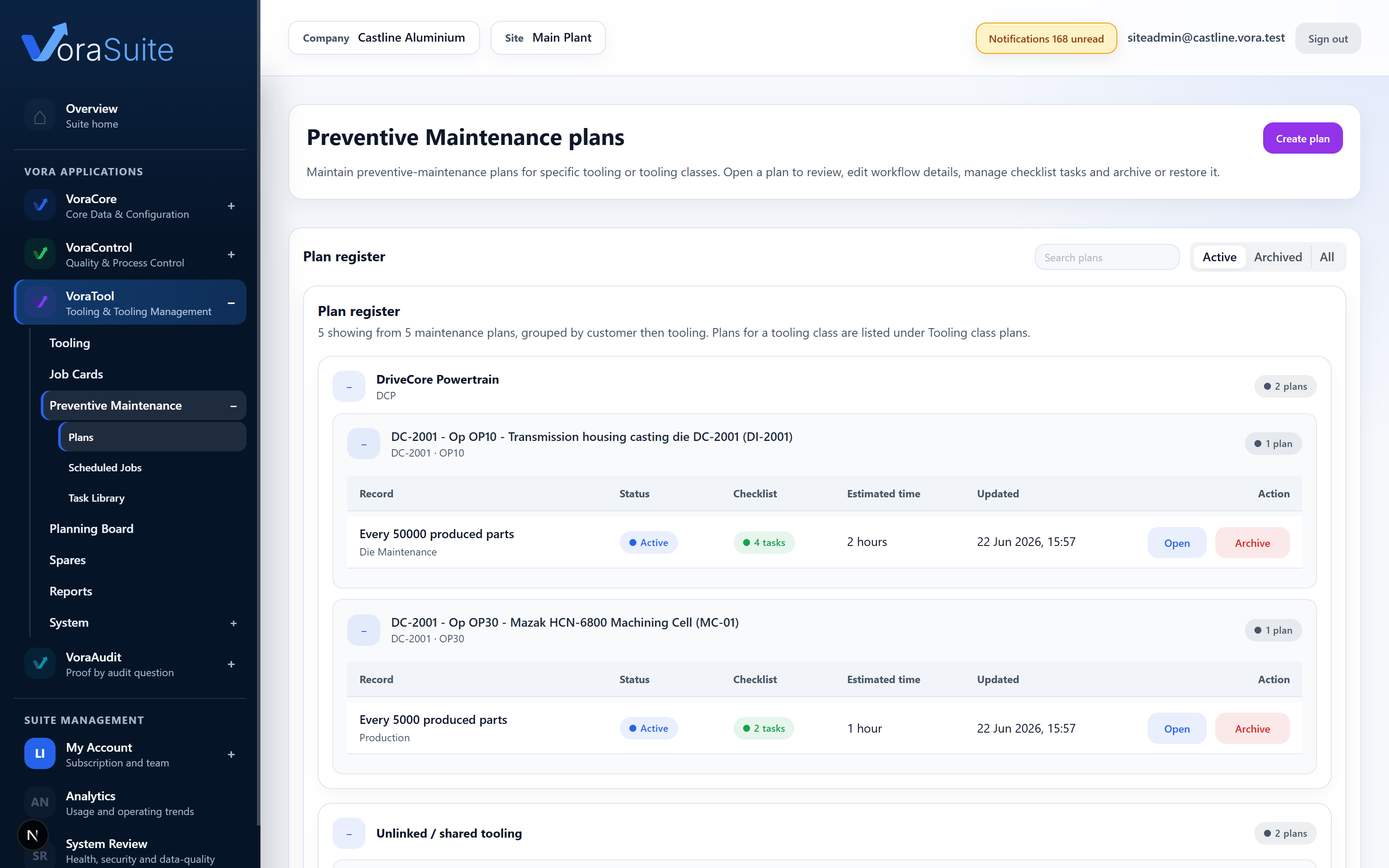
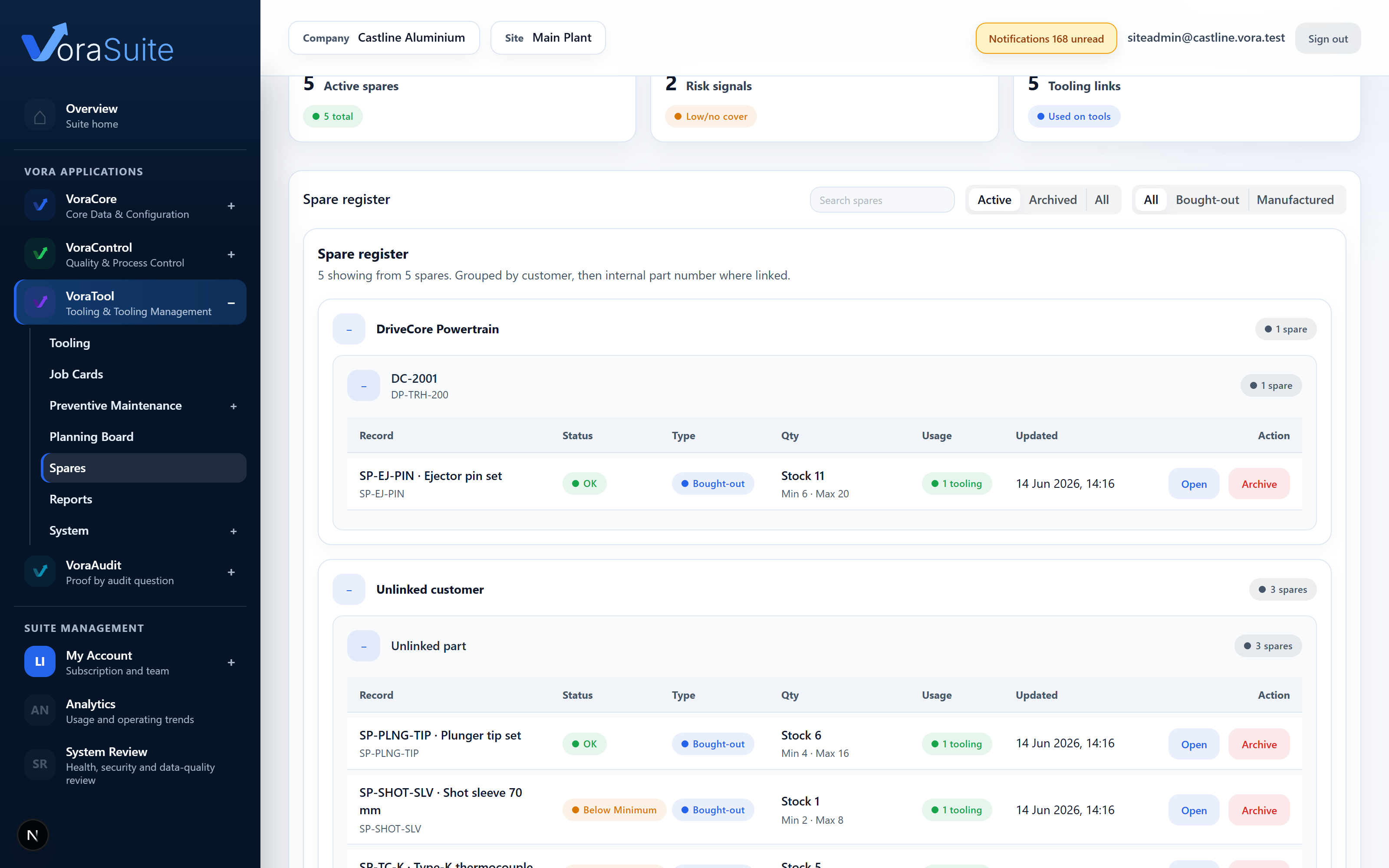
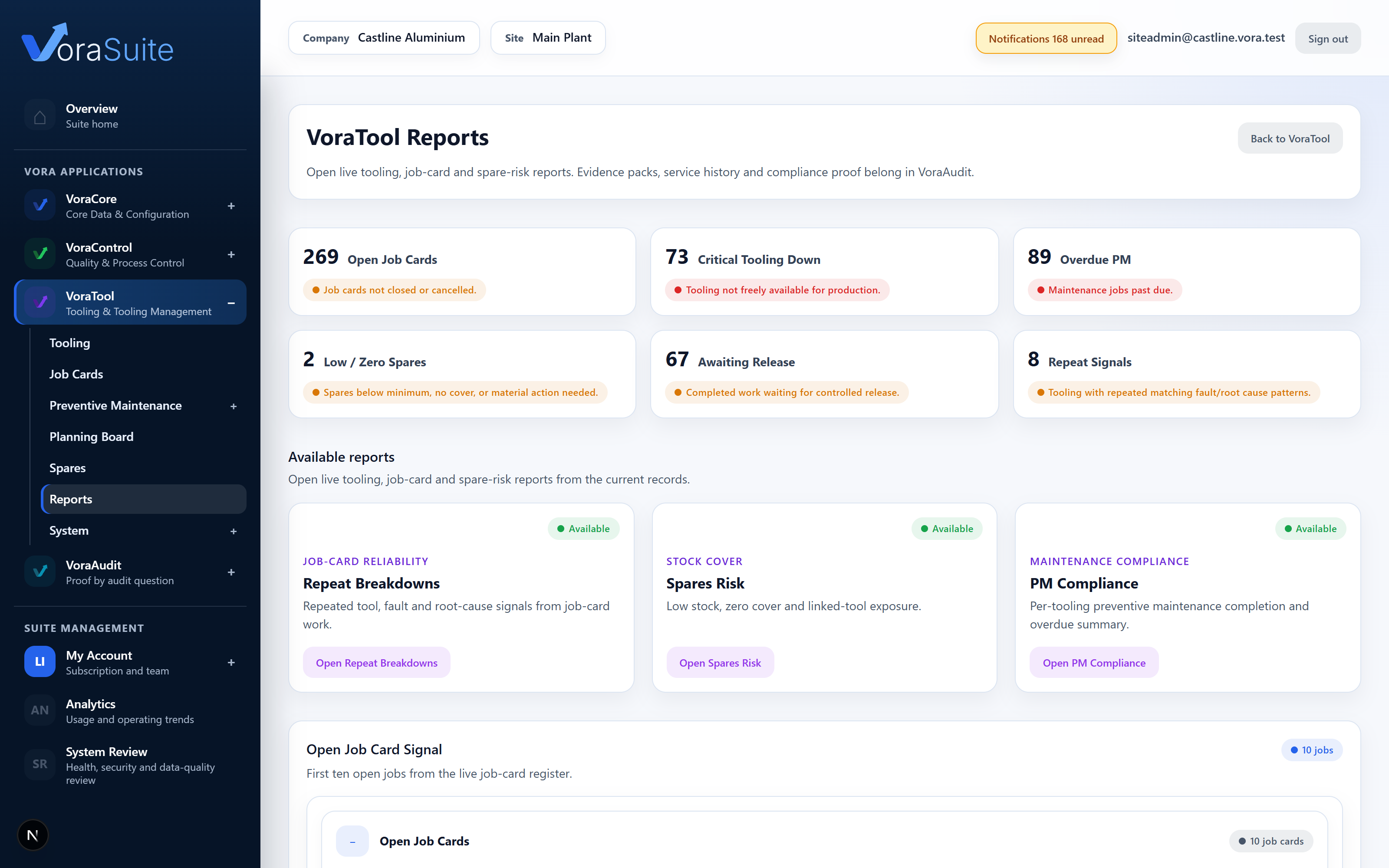
VoraTool produces records, not status updates.
Every action becomes a timestamped, attributed record on the shared trail, linked to the master data around it. That is what makes the proof a by-product of the work instead of a separate job.
Part of one evidence trail.
Built for the tooling that runs your parts
VoraTool is tooling management software for the toolroom. It is toolroom management software that tracks the full lifecycle of your moulds, dies and production tooling: what was repaired, what was serviced, which spares were used, and when the next preventive maintenance is due. A barcode tool tracker is built to log where a hand tool or a piece of equipment physically is. VoraTool is built for the moulds and dies that make your parts, and it keeps the tooling history that customers and auditors ask for.
Tooling history
Every repair, service and inspection lands in the tool's own history, timestamped and attributed to the person who did it. When a customer or auditor asks for the full service history of a mould, it is one question away, not a folder hunt. Nothing is retyped, because the history is a by-product of the work the toolroom already does.
Job cards and repairs
Repairs and service run on digital job cards, with labour time, evidence photos and root cause recorded at hand-off. Each card is opened against a specific tool, so the repair becomes part of that tool's permanent record. Toolmakers can work job cards from a shop-floor kiosk that keeps working through wifi drops.
Preventive maintenance
Preventive maintenance schedules generate the due work for each tool, based on the intervals you set. Completing a maintenance event advances the schedule automatically, so a mould never quietly falls behind. This is tooling preventive maintenance for moulds and dies, focused on production tooling rather than plant-wide facility maintenance.
Critical spares
Critical spares are tracked with minimum stock levels and stock movements, tied to the tooling that consumes them. When a spare drops below its minimum it is visible before a repair stalls waiting for a part. Spares are recorded as movements, so the register always reflects what was actually used.
Toolroom planning board
A visual planning board lays the toolroom's week out so the manager can balance job cards and maintenance across toolmakers. It plans toolroom work, not production runs, and it stays honest by drawing on the same job cards and preventive maintenance events the toolroom is already recording.
Toolmaker floor mode
Toolmakers work their jobs from a purpose-built floor kiosk that keeps working when the shop-floor wifi drops. Labour, photos and status moves are held on the device and sync when the connection returns, carrying the true entry time. It is continuity through dead zones, not a promise that the kiosk runs indefinitely without a connection.
How VoraTool is different from a tool tracker, a CMMS and a spreadsheet
Buyers often start by searching for a tool tracker, a CMMS or one more spreadsheet. Here is where VoraTool fits, and where those were never meant to.
A tool tracker
Barcode tool trackers are built for construction and field crews to check hand tools and equipment in and out and see where they physically are. That is a location question. VoraTool answers a lifecycle question: the repair, maintenance and service history of a mould or die, which a check-in and check-out tracker was never designed to hold.
A CMMS
A general maintenance system manages facility and equipment upkeep across a plant and treats a mould as just one more piece of equipment. VoraTool is focused on production tooling, with the job cards, spares and history that toolroom work on moulds and dies actually needs.
A spreadsheet
A spreadsheet holds numbers but loses the context: who did the repair, against which tool, with what evidence, and whether the next maintenance is due. VoraTool keeps every action connected to the tool, part and site, so the tooling history survives staff changes and audits instead of living in one person's file.
Common questions about tooling management software
Is VoraTool a tool tracking app?
Not in the barcode check-in and check-out sense. Tool tracking apps are built to log where hand tools and equipment are. VoraTool manages the lifecycle of production tooling, the moulds and dies that run your parts, including repairs, preventive maintenance, spares and a full service history.
Is VoraTool mould or die management software?
Yes, that is its core. VoraTool is built for the moulds and dies that run your parts, keeping each tool's repair, service, preventive maintenance and spares history as one connected record. Where a general tool tracker logs where a hand tool is, VoraTool manages the working life of the tooling itself.
Do we need wifi on the shop floor to use it?
The toolmaker and inspector floor kiosks keep working when the wifi drops. Entries are held on the device and sync when the connection returns, carrying the true entry time, so you do not lose work in a dead zone. It is continuity through connection drops, not a system that runs indefinitely without a connection.
Can it track mould and die maintenance schedules?
Yes. Preventive maintenance schedules generate the due work for each mould or die based on the intervals you set, and completing a maintenance event advances the schedule automatically, so tooling does not quietly fall behind.
How is tooling history kept for audits?
Every repair, service and inspection is recorded against the specific tool, timestamped and attributed to the person who did it. When an auditor asks for the service history of a tool, VoraTool answers from the records the work already created, so you keep the history without extra administration. It keeps controlled records; it does not certify compliance.
Is VoraTool a CMMS?
VoraTool is focused on production tooling rather than plant-wide facility maintenance. It covers the job cards, preventive maintenance, spares and history a toolroom needs for moulds and dies, without the overhead of a general facility maintenance system.
Further reading
See VoraTool on your own processes.
A short walkthrough mapped to your control plans and certification scope. No obligation, no sales sequence.